The $1,200 Question Nobody’s Asking
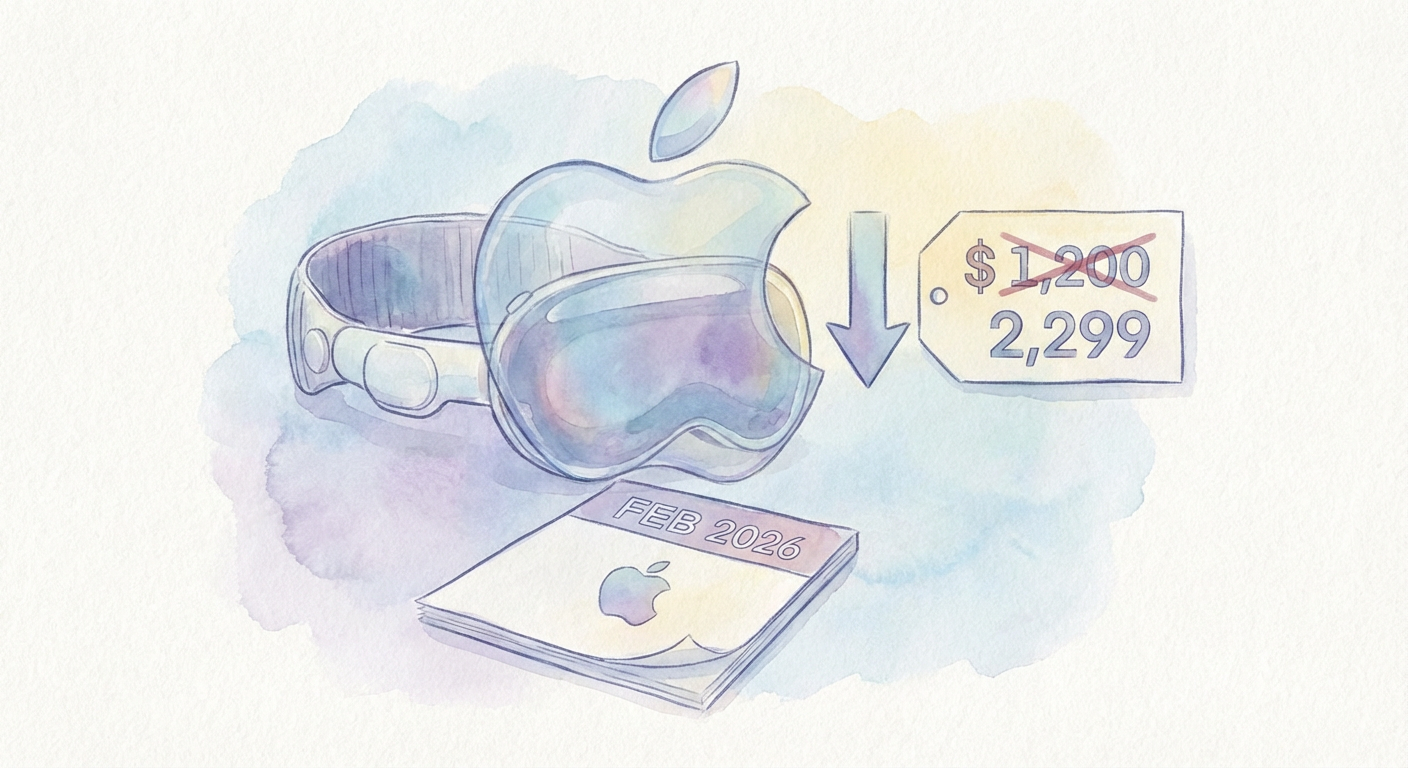
When Apple slashed twelve hundred dollars off the Vision Pro 2 this February, bringing it down to $2,299, most people saw desperation. I see something else entirely. Sure, Apple’s Vision Pro pricing strategy screams “we need to move units,” but that’s not the interesting part. The interesting part is what happens when spatial computing stops being a luxury toy and starts becoming, well, normal.

Think about it. We’ve been here before with every major tech shift. Remember when flat-screen TVs cost more than a decent used car? Now you can grab a 55-incher at Costco for what you’d spend on a weekend getaway. The price drop isn’t admission of failure. It’s the sound of a technology finding its place in the world.
What gets me excited isn’t the discount itself. It’s that we’re finally past the “will this even work?” phase and deep into the “how will this change everything?” phase. And honestly, I think we’re about to find out in ways that’ll surprise us.
The Data That Made Me a Believer
I was skeptical about VR’s staying power until I saw some numbers that made me pause. Meta’s latest earnings revealed that 15% of Quest 3S users are spending more than four hours daily in virtual reality. Four hours. That’s not casual gaming or the occasional virtual meeting. That’s lifestyle-level engagement.
But here’s the kicker: a recent Stanford Digital Wellness VR study found that 67% of VR users report improved work-life balance. Not worse. Better. This completely contradicts everything we’ve been told about screen time and digital wellness. Turns out, when your digital space feels genuinely separate from your physical space, it’s easier to leave work at work.
These aren’t early adopter numbers anymore. Best Buy saw VR headset sales jump 340% during the 2025 holidays compared to the year before. Apple’s spatial computing revenue hit $2.1 billion in the first quarter of 2026, up from $400 million the same period last year. We’re looking at real adoption by real people spending real money.
Why “Escaping Reality” Might Actually Save It
Here’s where I’m going to lose some of you. I think our obsession with “staying present” and avoiding “digital escapism” is missing something fundamental about how humans actually work. We’ve always needed spaces that aren’t here and now. Books, movies, daydreaming, meditation. The difference is that VR makes those spaces tangible in a way we’ve never experienced.
I’ve been testing the Vision Pro 2 for three weeks now, and the strangest thing isn’t how immersive it feels. It’s how much more intentional I’ve become about my physical space when I take it off. When you can literally design your ideal work environment or meditation space or social hangout, you start paying attention to what makes those spaces work. Then you bring that awareness back to your actual desk, your actual living room, your actual relationships.
The Stanford study backs this up. People aren’t using VR to avoid their lives. They’re using it to practice different ways of being, then applying what they learn to reality. It’s like having a sandbox for human experience.
The Uncomfortable Truth About Mixed Reality
But let’s be honest about what we’re walking into. The Vision Pro 2’s price drop makes it accessible to a much wider audience, which means we’re about to find out what happens when spatial computing isn’t just for tech enthusiasts and early adopters. And I’m not sure we’re ready for that conversation.
We’re talking about a technology that can make virtual objects feel as real as physical ones. That can overlay digital information onto everything you see. That can make other people appear to be sitting in your living room when they’re actually on the other side of the world. This isn’t just a new way to watch movies or play games. It’s a fundamental shift in how we understand the nature of presence itself.
The exciting part is also the scary part. We’re about to live through the biggest change in human perception since the invention of writing. The price drop means millions more people are going to experience reality as something you can edit, remix, and share. That’s either the most amazing thing ever or the beginning of the end of consensus reality as we know it.
What Happens Next
I think we’re standing at one of those moments where everything seems normal until you look back from the future and realize everything changed. The Vision Pro 2 price drop isn’t just about Apple wanting to sell more headsets. It’s about spatial computing crossing the line from experimental to essential.
Five years from now, I suspect we’ll look at 2026 as the year mixed reality stopped being science fiction and started being life. The year we stopped asking whether virtual and physical could coexist and started figuring out how to make them work together. The year reality got a lot more interesting.
And yeah, that makes me excited. Even if I’m completely wrong about where this leads, I’d rather be wrong about something this big than right about something safe. What do you think? Are we heading toward something amazing or are we about to mess up the one reality we’ve got? I’m genuinely curious how this looks from where you’re sitting.
