The Thing Everyone’s Doing That I Spent Six Months Making Fun Of
There’s this moment when you realize you’ve been wrong about something you were pretty confident about. For me, that moment happened on a Tuesday morning while I was jogging slowly enough that I could actually have a conversation with my friend Sarah, which felt like I was basically committing fraud at the gym. We weren’t even breathing hard. We were talking about her new kitchen renovation, for god’s sake. By my old logic, this was basically a warm-up, not real exercise.
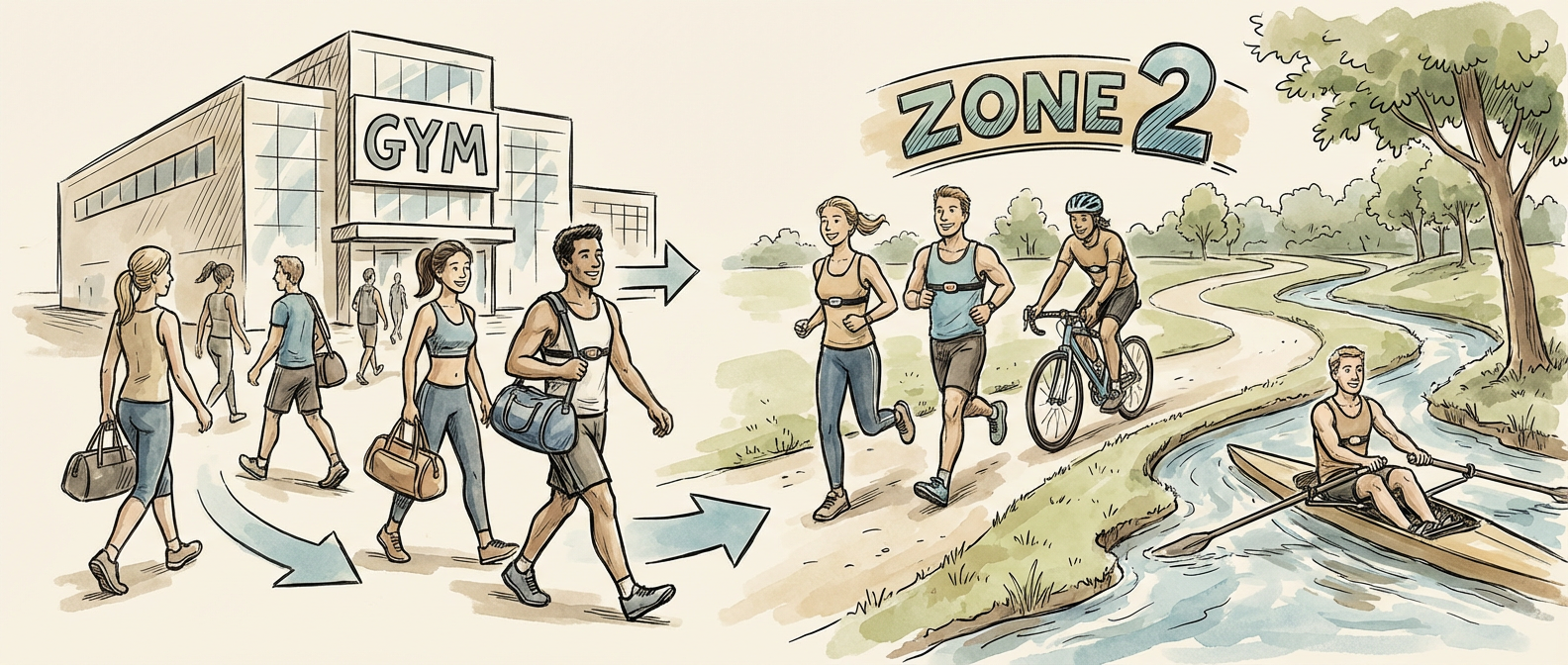
But here’s the thing: I kept doing it anyway. Three times a week. Same pace. Same heart rate zone. And somewhere around week four, I noticed I had more energy than I’ve had in years. I wasn’t exhausted all the time. I could actually recover. My resting heart rate dropped. I started sleeping better. And the worst part? It got boring so fast that I had to admit something was happening that I didn’t understand.
It turns out I wasn’t alone in being confused. Zone 2 training became the most-searched fitness term on Google across the US in the first quarter of 2025. People were dumping their HIIT classes and their CrossFit routines to go slow. Actually slow. Not “Instagram slow” but genuinely, conversationally, boringly slow. Something shifted in the fitness world last year, and I want to actually understand why instead of just being stubborn about it.
How Elite Athletes Have Been Cheating the System the Whole Time
The science behind this has been sitting in plain sight for a while. Dr. Iñigo San Millán, who runs the performance program for UAE Team Emirates, basically looked at how the best cyclists in the world actually train and found something embarrassing: about 80 percent of their training happens at low intensity. These are people who could crush most of us on a bicycle, and they spend most of their time going slow enough to have a conversation.
What’s wild is that this isn’t new information. Dr. Iñigo San Millán’s Zone 2 Research Overview has been out there. The research has existed. But somehow we all got sold on the idea that working out means suffering. That your heart should be in your throat and your legs should be screaming. That more intensity equals better results. So we did burpees until we felt like we were dying and called it fitness.
The mechanism is almost boring in how simple it is. Zone 2 training, basically exercising at 60 to 70 percent of your maximum heart rate (the pace where you can still talk), builds mitochondrial density. Those are the little powerhouses inside your cells that handle energy production. More of them, working more efficiently, means your body gets better at using oxygen and generating energy without burning out.
The Data Got Too Good to Ignore
I’m generally skeptical of fitness trends because they usually involve someone selling something. But the research started accumulating in a way that felt harder to dismiss. The British Journal of Sports Medicine published a meta-analysis in 2025 that looked at 23 different studies on Zone 2 training. Across recreational athletes doing 12-week programs, mitochondrial density improved by an average of 28 percent. That’s not subtle. That’s your cells becoming more capable of producing energy.
Think about what that actually means for regular life. You’re not just training to look good in a photo. You’re making your body more efficient at the thing it does every single day, which is producing energy. That’s why people keep mentioning they feel less tired. Their bodies are actually working better at a cellular level.
The momentum got weird when Peter Attia’s podcast episode on Zone 2, which came out back in 2023, started making a resurgence. It’s been downloaded over 4 million times and became one of the most-shared health podcast episodes in the past few years. People were going back to it, sharing it, building entire fitness philosophies around a conversation from nearly two years ago. That doesn’t usually happen unless something is actually resonating.
Why Everyone’s Ditching the Gym (And What They’re Buying Instead)
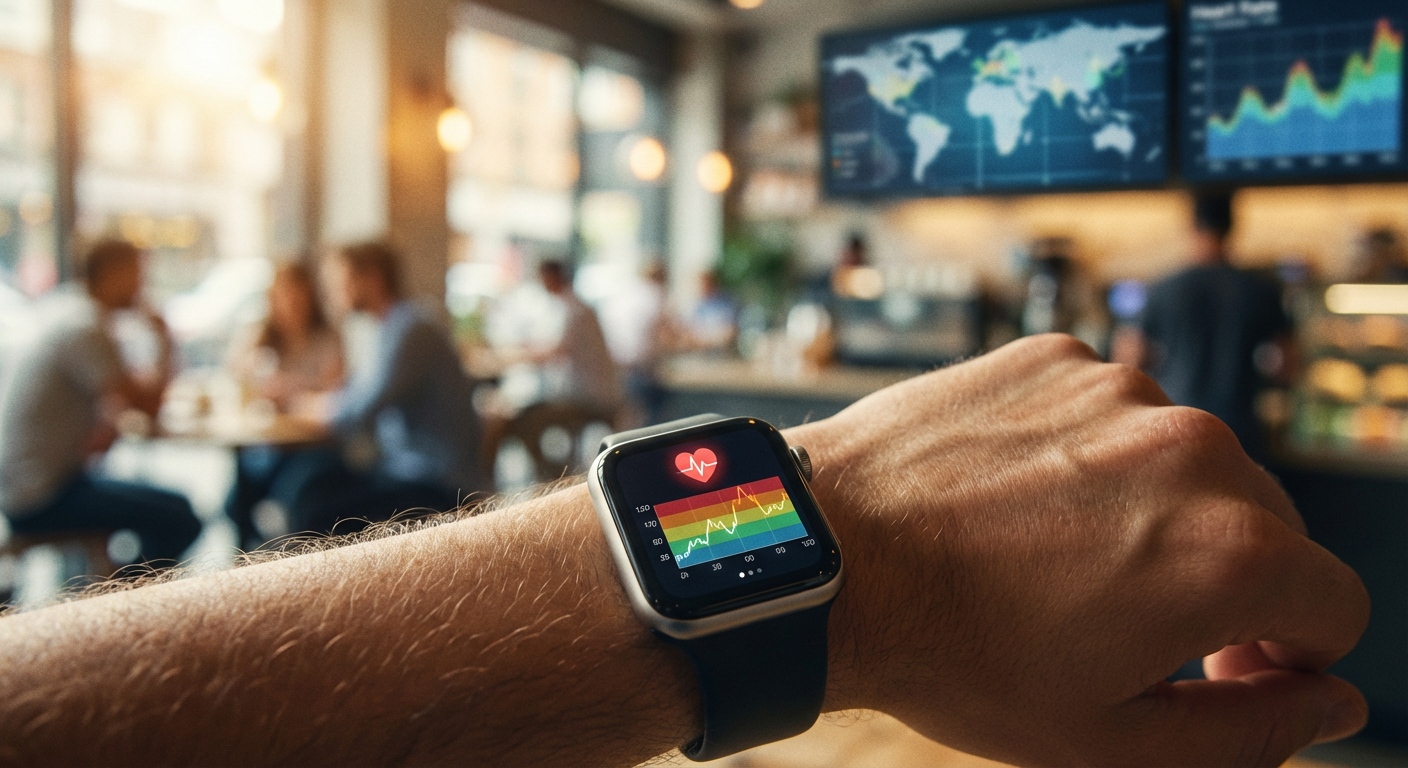
The fitness tracker market hit $91.3 billion globally in 2025. Heart rate zone features became the standard selling point that 68 percent of people actually care about when buying a watch or tracker. Nobody’s marketing their device by saying “get a great six-minute ab workout.” They’re marketing the ability to train in the exact right zone, which sounds boring until you understand that it actually works.
What’s happening is people are leaving the gym not because they’re giving up on fitness, but because they finally have permission to slow down. The gym industry built itself on the idea that more is better, that you need to be punished into health. But if the elite athletes in the world are spending most of their time at low intensity, maybe the person on a treadmill next to you doing sprints is the one doing it wrong.
I’m still not going to pretend Zone 2 training is exciting. It’s not. It’s repetitive and mellow and sometimes you’re bored enough to think about spreadsheets. But I’ve also stopped thinking about it as “just cardio” or “barely exercise.” The speed isn’t the point. The point is building a body that doesn’t feel wrecked all the time.
The Honest Part Where I Admit I Might Be Wrong About Everything
Here’s what gets me about this whole thing: I spent years being pretty confident that going harder was better. I thought rest was for people who weren’t serious about fitness. I thought that if you weren’t sweating, you weren’t working. And maybe I wasn’t totally wrong about that for specific goals, but I was definitely missing something about sustainability.
The shift toward Zone 2 isn’t really about a new discovery. It’s about finally listening to what actually works for people over the long term. Building a training system you can do consistently without destroying yourself. That’s less exciting as a narrative than “I did this wild workout and feel amazing,” but it’s probably more true for most people.
I’m genuinely curious what made you start paying attention to Zone 2 training, if you have. Or if you think this is all overblown and everyone’s just bored with intensity. Hit me up with your thoughts.
