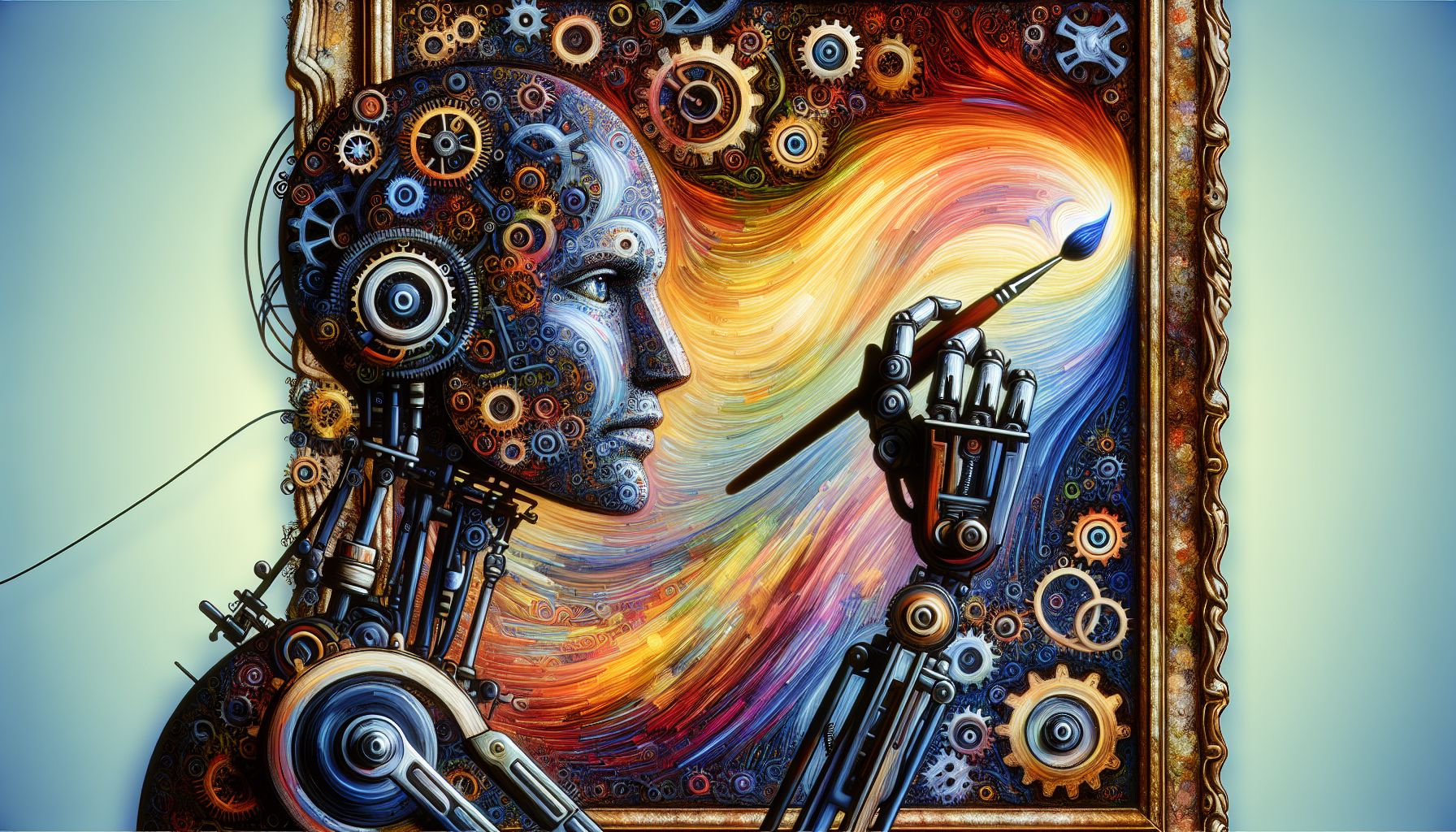
Introduction: A New Era for Creativity
Alright, folks. Gather around as we dig into something that’s been stirring a cauldron of heated debates, awe, and even a bit of existential dread. Artificial Intelligence in the creative arts is here, and it’s painting more than just pretty pictures. It’s redrawing the lines of what we consider possible in the world of creativity. Now, I’m no Picasso, but the idea that a machine can create art that makes humans go “Hmm, that’s pretty deep” is mind-blowing.
I’ve been watching this space with a popcorn-worthy mix of amazement and skepticism. Just the other day, I found myself staring at an AI-generated piece of art longer than I’ve scrutinized any of my own doodles. Shocking, I know. So, what’s driving this whirlwind of creative machine evolution, and what does it mean for artists, techies, and art enthusiasts alike? Sit tight as we unravel this tech-art mashup.
The Rise of Machine Artists: How Did We Get Here?
The AI Leap
Once upon a time, AI art was limited to basic doodles and experimental sketches. You know, stuff you’d hang on your fridge, not in the Louvre. Since then, we’ve leaped forward faster than you’d say “digital renaissance.” The development of algorithms like GANs (Generative Adversarial Networks), and let’s just call them “art-bots” for flair, has opened floodgates of creative potential. They can now produce works of art that range from abstract to photorealistic. It’s like watching a toddler grow into a prodigious artist overnight.
My first encounter with AI art left me more than a little skeptical. Who’s actually the artist here—human or machine? Turns out, both. AI art is a collaboration, with the human setting the course and the machine providing the wind in the sails.
From Experiment to Exhibit
AI’s role in art has progressed from quirky gimmicks in tech demos to serious contenders in art galleries. Remember when AI-generated art was auctioned at Christie’s for over $400,000? That’s right, not Monopoly money! It sparked a conversation, or maybe a heated debate, about the nature of authorship and the value of art.
What’s next? I think we’ll see more AI artists getting the same room as their human counterparts in prestigious galleries. Who’s up for an AI vs. Human Art Duel? The implications are as fascinating as they are provocative.
Implications: Artistry in the Age of AI
Democratizing Creativity
One of the most exciting aspects of AI in the creative arts is its ability to democratize creativity. Fancy yourself an artist but can’t quite handle a paintbrush? No problem! AI tools like DeepArt and OpenAI’s DALL-E are letting armchair artists create impressive visuals without formal training. It’s like having an entire symphony orchestra at your fingertips when all you know is ‘Do-Re-Mi.’
This brave new art world lowers the barriers to entry, allowing more people to express their creativity in visual mediums. It’s like a club where everyone’s invited—no snobbery or exclusivity.
Challenging the Notion of Originality
But here’s the juicy bit—does art lose its meaning when it lacks human touch? Isn’t the whole point of art to connect with people on a personal level? Spoiler alert: there are no clean-cut answers. Purists argue that machines lack the emotional depth to create meaningful art. Meanwhile, others suggest that AI art is a new form of originality, born from the meeting of complex algorithms and human input.
The more I ponder this, the more I suspect we’re on the edge of redefining what “original” means. Think of AI as a tool that doesn’t replace human touch but amplifies it. Makes you think, right?
Challenges: The Gooey Middle
Ethical Dilemmas
The ride isn’t all smooth jazz and celebratory toasts, though. With great power comes great—wait, wrong franchise. But seriously, ethical minefields await. If an AI makes something profound, who gets the credit? The developer? The user? You can see how things might get a tad murky.
Also, let’s not forget the risk of AI-generated art being misused. Deepfakes already give us a sense of how something created through AI can deceive. Trust me, keeping your eyes peeled is not optional.
Technical Limitations
Even with all the hullabaloo, AI isn’t perfect. It’s easy to forget that when you’re getting star-struck by machine-generated masterpieces. Ever thrown spaghetti on a wall to see what sticks? That’s a bit like training an AI to produce art. Some pieces are masterpieces, others…well, they could politely be described as “a learning moment.”
The cutting-edge tech still struggles with subtleties of mood and subjective themes that are second nature to seasoned artists. But knowing how fast technology evolves, we’re talking ‘see you in six months’ for that problem to shrink.
The Future: Where Are We Heading?
Speculating the Unlimited
Here’s where I put on my Mystic Meg hat and go all speculative on you. AI is becoming an artistic partner rather than a rival. As technology evolves, the boundaries separating human creativity and machine ingenuity will likely blur even further. I wouldn’t bet against a future where AI tools are staples in every artist’s toolkit, just another medium like oils and charcoals.
Could we end up coining a new term like “blended artform”? It’s as if the possibilities are getting wider with each software update, each breakthrough. Isn’t living in the future grand?
Embracing Synergy
When artists and AI work together, you get this beautiful web of possibility, a partnership that allows both human and machine to push beyond their limitations. If you ask me, the future holds an ecosystem where AI isn’t just a tool but a collaborator that enhances human creativity. A bit like having a sidekick that doesn’t steal your thunder but helps you reach new heights.
Conclusion: A Canvas Big Enough for All
As we stand at the intersection of technology and artistry, AI in the creative arts is like an uncharted canvas, eagerly waiting for its first brushstroke. While some of us may approach with trepidation, others see this as an unprecedented opportunity to redefine the boundaries of creativity.
As we ponder what it means to create, appreciate, and own art in this age of digital renaissance, let’s remember that the beauty of art, whether born of flesh or silicon, lies in its ability to challenge, motivate, and enrich us. So next time you find yourself nose-to-screen with an AI-generated masterpiece, take a moment to wonder at the wonders of this merging of intellect and artistry.
What do you think? Is AI art a sign of the apocalypse or a dawn of limitless creativity? Either way, it’s here to stay, and I, for one, am excited to see just where this artistic journey will take us.
