The Setup: Why I Decided to Test Drive the Whole Category
Around the beginning of this year, I realized I’d been opening journaling apps the way some people open their fridge at midnight—not really looking for anything specific, just hoping something interesting would appear. I had Day One collecting dust. Notion was sitting there with its new templates. There were others I’d never even opened.
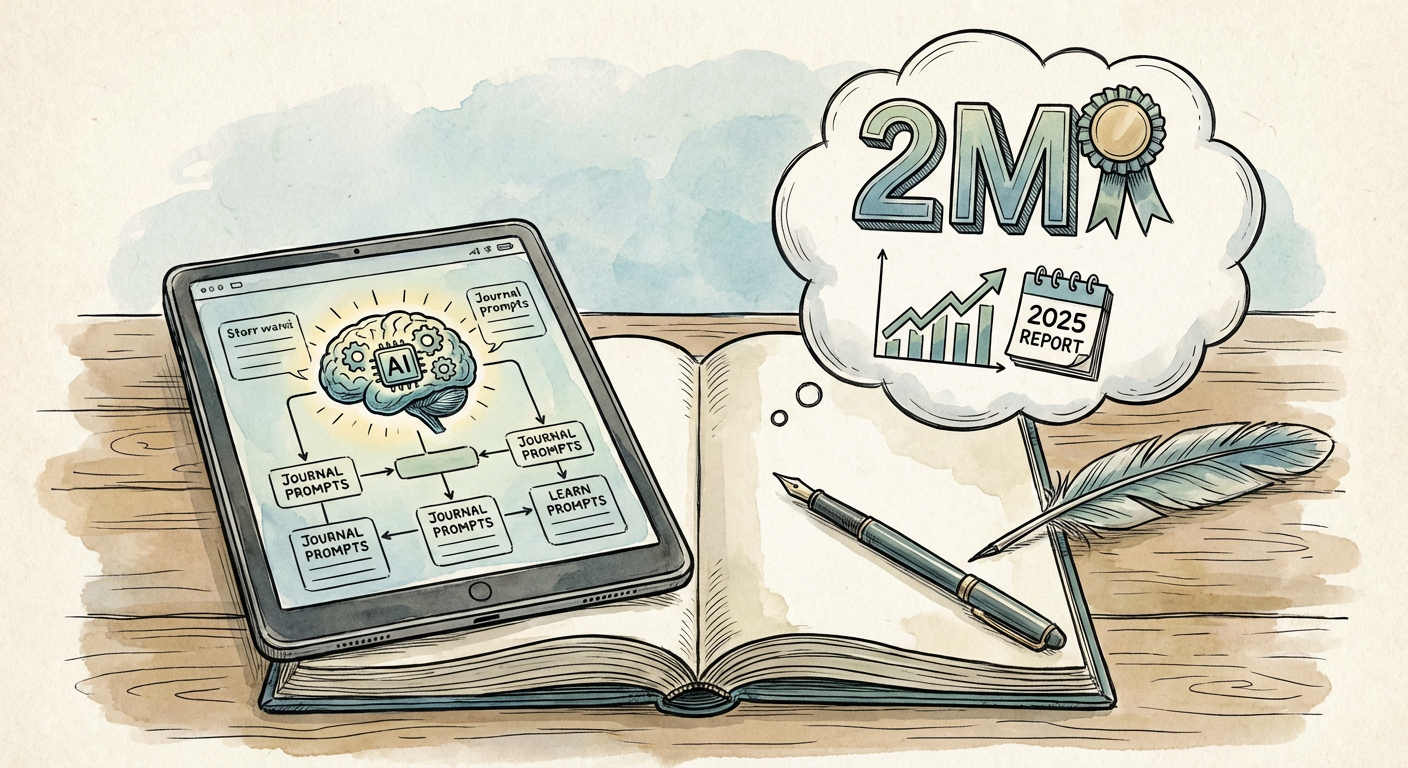
I decided to do something ridiculous: actually test them all methodically. For 90 days straight. Track the numbers. See which ones I actually returned to versus which ones I abandoned after the honeymoon phase wore off. The mental health app market has been exploding (we’re talking 17.5 billion dollars globally in 2025, with journaling apps growing at 22% year-over-year), so clearly something was working for someone. I wanted to know if that someone could be me.
What I found wasn’t a clear winner. It was messier than that. Better, actually.
The Streak Data: How AI Prompts Changed My Writing Habits
Here’s what my numbers actually said: with AI-powered prompts, I averaged 4.2 entries per week. Without them, I dropped to 1.8. That’s more than double. Legitimately wild.
The catch is that those AI-prompted entries were about 40% shorter on average. I was writing quick, snappy reflections instead of the longer, wandering pieces I’d produce when sitting down intentionally. The AI was essentially gamifying consistency at the expense of depth. This tracks with what researchers at the University of Rochester found last year: AI-assisted journaling bumped consistency up by 34%, but emotional depth scores dropped by 18%. So the app was making me show up more often, but also making me show up less meaningfully.
Day One’s big 2025 overhaul, released mid-year, introduced reflection prompts that actually analyze your entry patterns over time. The AI looks at what you’ve written before and asks questions that build on your own history. That was different from the generic prompts in other apps. It felt less like a template and more like having someone who’d actually read your stuff before. My entries using that feature ran longer than in the other AI apps, though they still didn’t match my best non-prompted writing sessions.
What Notion Taught Me About Friction
Notion’s journaling templates launched in late 2024, and by 2025 they’d hit over 2 million active users. That’s not nothing. I spent a lot of time in Notion, mostly because I was already there for other things. Friction matters more than I’d expected.
The template itself was solid. Clean. The AI integration was helpful. But I had to want to be in Notion first. If you’re not already using it for work or life management, you’re asking yourself to learn another app’s ecosystem just to journal. I did it for the experiment. Most people don’t have that kind of patience. My Notion entries were consistent during work weeks when I was already opening the app constantly, then tapered off the moment I had time off and wasn’t checking my project management stuff.
This taught me that the best journaling app isn’t always the most feature-rich. Sometimes it’s the one that’s already installed and closest to your thumb.
Day One and the Reflection Question
Day One’s 2025 redesign genuinely impressed me, and I don’t say that lightly. The Day One’s 2025 AI journaling features built something that actually felt like it was reading my entries, not just throwing random prompts at me. The reflection prompts would surface patterns I’d completely forgotten about. I’d write about feeling overwhelmed, then three weeks later it would ask me to reflect on how I talk about uncertainty. That’s not a template. That’s paying attention.
The trade-off was that using Day One required me to actually open it as a dedicated app. No frictionless integration into my existing tools. But that also meant I was doing something intentional when I showed up. My best entries, the ones I actually wanted to revisit later, almost all happened in Day One. They were longer. They wandered. They felt like they contained something real.
The Uncomfortable Truth About AI Journaling
After 90 days and thousands of data points, here’s what I’m sitting with: the apps helping me write more were making me think less. The Grand View Research mental health app market report probably doesn’t dig into this, but it matters for anyone actually trying to use these tools for something real.
AI prompts are fantastic if you struggle with the blank page. They genuinely are. I wrote four times as often when I had them. But consistency and depth are not the same thing. I spent most of 2025 asking myself which one I actually needed, and the answer kept changing depending on the week.
The apps didn’t fail me. They just made me aware of what I was actually looking for. Some days I needed to show up consistently, even if I was just writing a few sentences. Other days I needed to sit down and actually think, without the app suggesting what I should think about.
If you’re considering trying one of these, here’s my honest take: pick the one that feels like the least friction for how you actually live. Don’t pick based on features. Pick based on whether you’ll actually open it. Then notice what happens to your writing after a month. You might surprise yourself with what matters most.
