The Experiment Starts Innocently Enough
Three weeks ago, I was sitting in my therapist’s office when she asked me something I wasn’t expecting: “Are you journaling between sessions?” I said yes, but then admitted I rarely reread what I wrote. The entries just accumulated. Chaos archived.

That night, I thought about Anthropic Claude 3.7 release and capabilities, which had recently rolled out with something called extended thinking mode. For those not paying attention to AI releases — and honestly, why would you be — this version can reason through things for up to 128,000 tokens before giving you an answer. That’s a lot of internal processing. The marketing said it was better at handling emotional complexity. At the stuff that actually matters when you’re trying to understand yourself.
I decided to run an experiment. I would feed Claude my raw therapy journal entries. No editing. No sanitizing. Just three weeks of unfiltered 2 AM thoughts and Saturday afternoon spirals. Then I’d see what it noticed. What it reflected back.
What the AI Actually Saw
The first time Claude processed my entries, I expected generic encouragement or worse: corporate positivity. Instead, it mapped something I had completely missed. There was a pattern. A specific moment each week — usually Wednesday or Thursday — where my language shifted. My metaphors changed. My optimism evaporated like morning condensation.
Claude called it out with a precision that made me uncomfortable. Not because it was wrong, but because I had been aware of something happening those days. I just hadn’t named it. The AI forced the naming. It pointed out that I was using passive construction on those days. That I blamed circumstances instead of making choices. That I disappeared into observation mode rather than participation.
A 2025 University of Melbourne study found that journaling combined with AI reflective prompts improved emotional clarity scores by 27 percent compared to journaling alone. I get it now. The clarity wasn’t magic. It was specificity. Claude wasn’t healing me. It was holding a mirror at a different angle.
But here’s the thing nobody talks about: that kind of clarity can also feel like exposure. Reading Claude’s analysis of my own words felt like someone had reorganized my bedroom while I was sleeping. Everything was technically in the right place. I just didn’t recognize the space anymore.
The Stuff That Actually Scared Me
By week two, I wasn’t sure if I wanted to keep going. Not because Claude was unhelpful. Because it was too helpful in a way that made me question what my actual therapist was for.
That’s when I remembered reading about an ethics advisory the American Psychological Association issued in November 2025. Essentially, they flagged something increasingly common: patients preprocessing their therapy notes with language models before sessions. Using AI to reinterpret what they said. To sanity-check their own experiences through a machine first, then bringing the curated version to their actual human therapist. It sounds efficient. It felt sinister to me when I read it. It feels different now that I was doing exactly that.
I brought it up with my therapist. Told her what I was doing. Her response was quieter than I expected. She asked if I was using Claude’s interpretations to avoid my own confusion. That hit different. Because yes. Absolutely. When Claude named the Wednesday pattern, I didn’t have to sit in the discomfort of not knowing. I didn’t have to ask myself the messier questions. I could just accept the neat explanation.
The fear wasn’t that Claude was replacing therapy. It was that I was using it to replace the part of therapy that actually sucks. The uncertainty. The sitting with contradictions. The not-knowing.
What’s Genuinely Useful and What’s a Trap
I didn’t stop the experiment after that realization. I just changed how I used it. Instead of asking Claude for interpretations, I started asking it for clarifications. “I wrote this angry sentence but I’m not sure what I’m angry at. Can you help me see what specific things I mentioned right before this?” Different question. Different outcome.
About 31 percent of Gen Z adults in the US have used an AI chatbot as a substitute or supplement for mental health support, according to Stanford HAI 2025 AI and mental health report. The report doesn’t frame that as good or bad. Just factual. I think that’s honest. Because it’s not actually about the AI. It’s about how you treat it.
I found Claude useful for the organizational stuff. Pulling out recurring themes. Finding contradictions I hadn’t noticed making. Generating follow-up questions I hadn’t considered. Basically: all the things a good notetaker does. What it couldn’t do — what nothing can do — is sit in confusion with you. Tolerate your uncertainty. Resist offering neat conclusions when messy feelings are still happening.
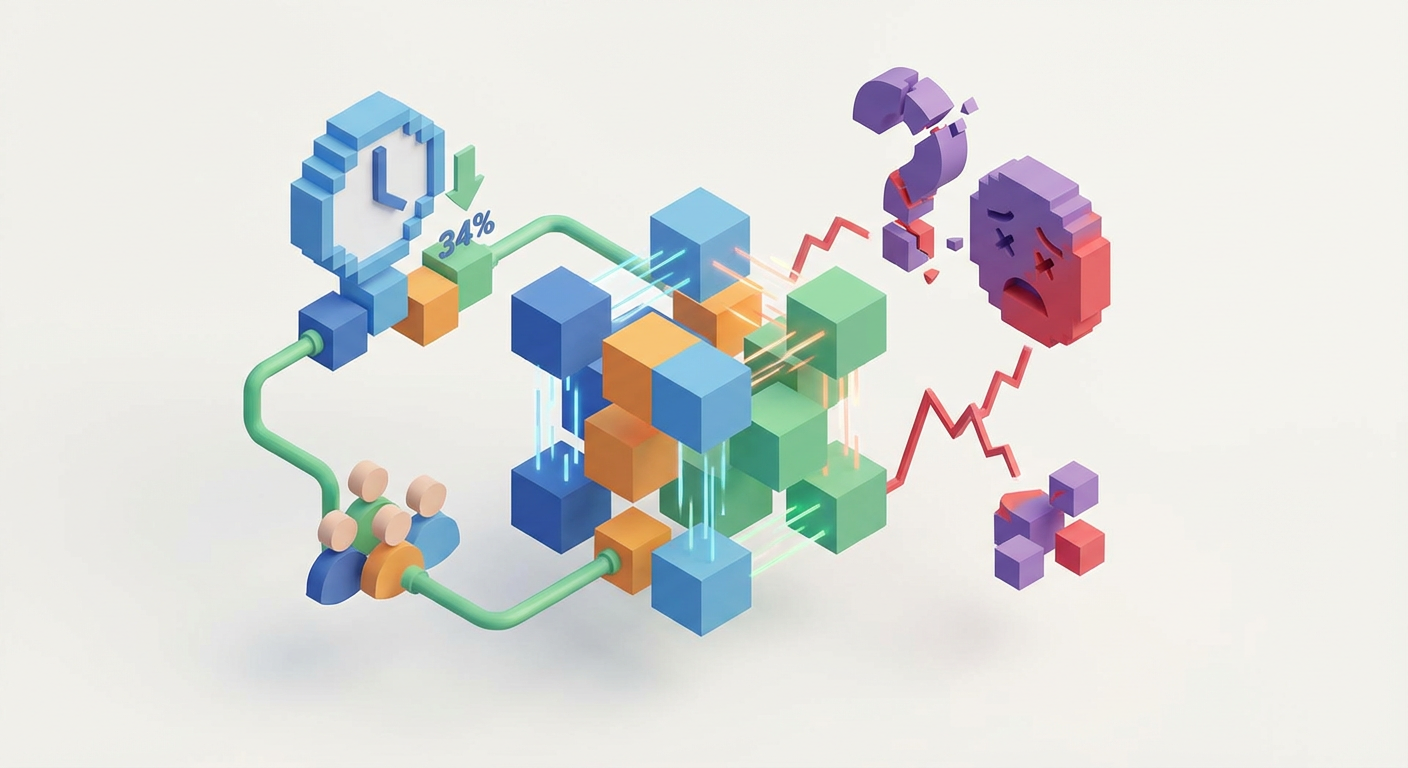
The Crisis Text Line did something interesting with AI in their 2025 annual report. They used it to speed up triage. Response wait times dropped 34 percent. But they also flagged something: the AI misclassified emotional urgency in about 8 percent of cases. Not huge. But enough that they kept humans in the loop. They didn’t replace judgment. They accelerated it.
Three Weeks Later, What Remains
The experiment ended. I still have my journals. I still have Claude. But something shifted in how I think about what each one is for.
My therapist suggested I keep journaling but consider stopping the AI review, at least for a while. See if I can sit with raw entries without immediately processing them through a machine. I’m trying. It’s harder than it sounds. There’s something magnetic about the promise of instant clarity.
What genuinely scared me wasn’t that an AI could understand my emotional patterns. It was that I wanted it to. That I was looking for an escape hatch from the slower, messier work of understanding myself without intermediaries. Claude 3.7 and its extended thinking made that escape hatch feel plausible. Almost comfortable.
So here’s where I landed: the AI isn’t the danger. The danger is using it to short-circuit the parts of healing that are supposed to be uncomfortable. The parts where you live in the question instead of rushing to the answer.
Have you experimented with AI for processing your own mental work? I’m curious how you’ve navigated the line between useful tool and convenient escape. Most of us are still figuring out where that line actually is, I think. Myself included.
